
Blog · 18 October 2026 · 3 min read
Auto keratometer: what it measures and how to choose one
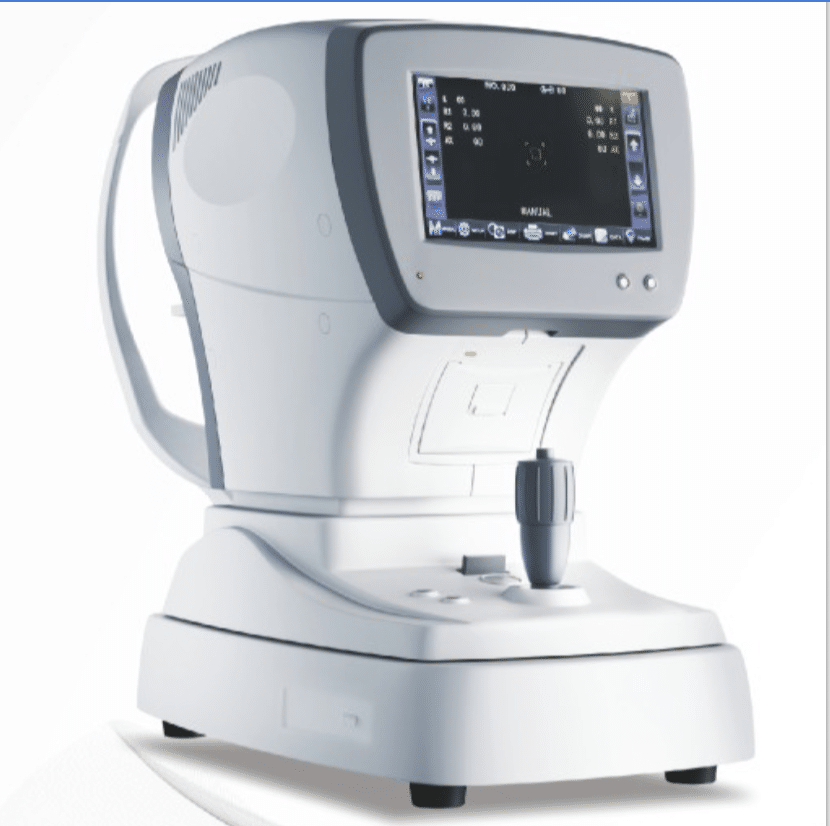
An auto keratometer measures the curvature of the cornea in a few seconds: the two main curvatures (K1 and K2), their axes and the corneal astigmatism. Most auto keratometers today are built into an autorefractor, so one instrument gives both the refraction and the keratometry. This guide explains what a keratometer measures, how to read the result, and what to look for when you choose one.
What a keratometer measures
A keratometer measures the radius of curvature of the central cornea in millimetres and converts it into corneal power in dioptres. It finds the steepest and the flattest meridian; the difference between the two is the corneal astigmatism, and its axis shows the direction. These readings are used for contact lens fitting, for following corneal astigmatism over time, and as one of the inputs for intraocular lens calculations.
How an auto keratometer works
The instrument projects a ring of light onto the cornea and measures the size and shape of its reflection. A steeper cornea gives a smaller reflection; an oval reflection shows astigmatism. Automated keratometry takes a second or two, most instruments measure several times and show the average, and auto tracking keeps the eye centred while you measure.
Manual or automatic keratometer
A manual keratometer needs the examiner to line up the mires by hand. It is simple and durable, but it takes practice and time, and the result depends on the person measuring. An auto keratometer measures in seconds with little influence from the operator, stores and prints the result, and is usually combined with an autorefractor. We supply autorefractor-keratometers.
How to read a keratometry result: K1, K2 and KRT
- K1: on most printouts the flatter meridian, given in mm and in D, with its axis.
- K2: the steeper meridian, normally about 90° away from K1.
- AVE or Km: the average of K1 and K2.
- CYL: the corneal astigmatism, the difference between K2 and K1 in dioptres, with its axis.
- KRT or KER: many autorefractors print the keratometry block under one of these labels; REF is the refraction block.
Millimetres and dioptres are two ways of writing the same curvature: the instrument converts one into the other with a fixed keratometric index. A radius of 7.50 mm is about 45 D; a flatter cornea has a larger radius and fewer dioptres.
What to look for when you choose an auto keratometer
- Measuring range. A radius range of 5.0 to 10.0 mm covers nearly all corneas you will see in practice.
- Corneal diameter. Measuring the visible iris diameter saves a step in contact lens fitting.
- Refraction in the same instrument. One measurement position for refraction and keratometry saves time in a busy pre-test room.
- Minimum pupil size. For the refraction part, a small minimum pupil (2.0 mm) means fewer failed measurements.
- Screen, printer and memory. A clear screen, a built-in printer and stored readings per eye make the result easy to hand on.
Our autorefractor-keratometers
| Model | Keratometry | Corneal astigmatism | Screen | Price excl. VAT |
|---|---|---|---|---|
| TW-9100K | 5.0–10.0 mm, 33.00–67.50 D | 0 to 15 D | 5.7-inch colour | €2.959 |
| TW-9200K | 5.0–10.0 mm, 33.75–67.50 D | 0 to 8 D | 7-inch touch screen | €3.790 |
Both measure refraction (sphere −20 to +20 D) and keratometry, measure the corneal diameter, keep 10 readings per eye and print on a built-in thermal printer. The TW-9200K adds a touch screen and a colour fogging chart. You find them with our other autorefractors.
Questions about keratometers
What is the difference between an autorefractor and a keratometer?
An autorefractor measures the refractive error of the whole eye; a keratometer measures only the curvature of the front surface of the cornea. An autorefractor-keratometer does both in one sitting.
What do K1 and K2 mean?
K1 and K2 are the curvatures of the two main meridians of the cornea: on most printouts K1 is the flatter and K2 the steeper one. Their difference is the corneal astigmatism.
What is a typical keratometry reading?
Most adult corneas measure roughly between 42 and 45 D (about 8.0 to 7.5 mm), with an average near 43 to 44 D. Readings vary from person to person.
Order or ask a question
Send us a WhatsApp message or request a quote. You get a personal answer within 24 hours.
More guides
All articles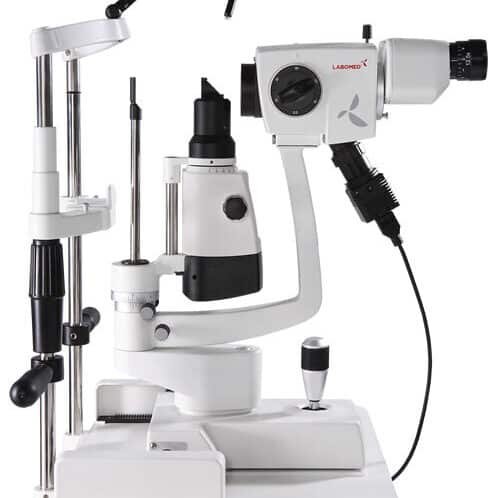
18 October 2026 · 3 min read
Slit lamp price in 2026: what a slit lamp costs
Slit lamp price in 2026: what a new slit lamp costs by magnification steps, what a digital slit lamp with camera adds, and what else to…
18 October 2026 · 4 min read
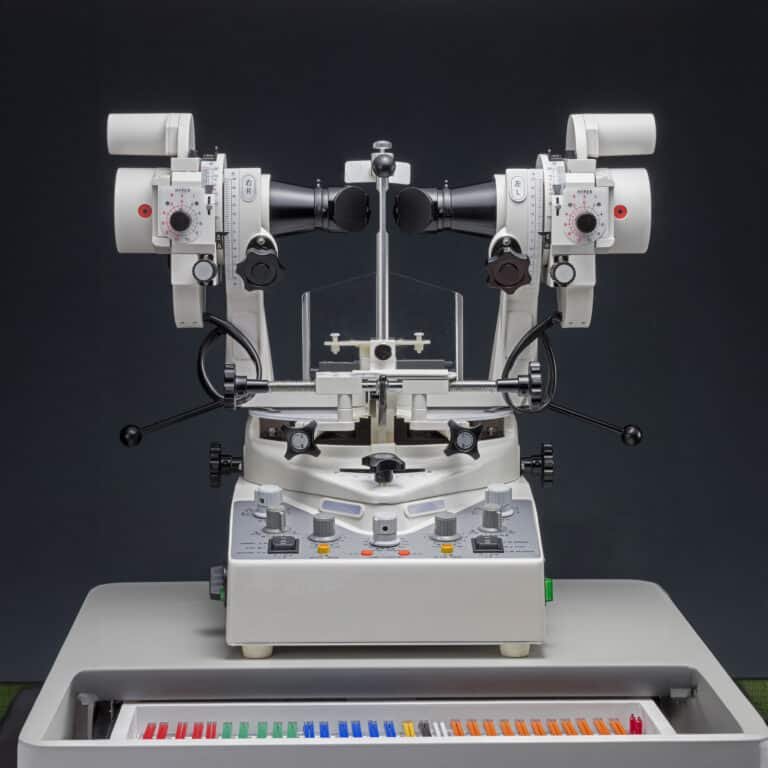
Orthoptic instruments: what each one measures
Orthoptic instruments explained: prism bars, loose prisms, Bagolini lenses and the synoptophore. What each one measures and what to look for when buying.

7 September 2024 · 12 min read
The Future of Eye Care: Tele-Optometry and Remote Care
This comprehensive article explores the rise of tele-optometry, The article also delves into the technology behind tele-optometry,