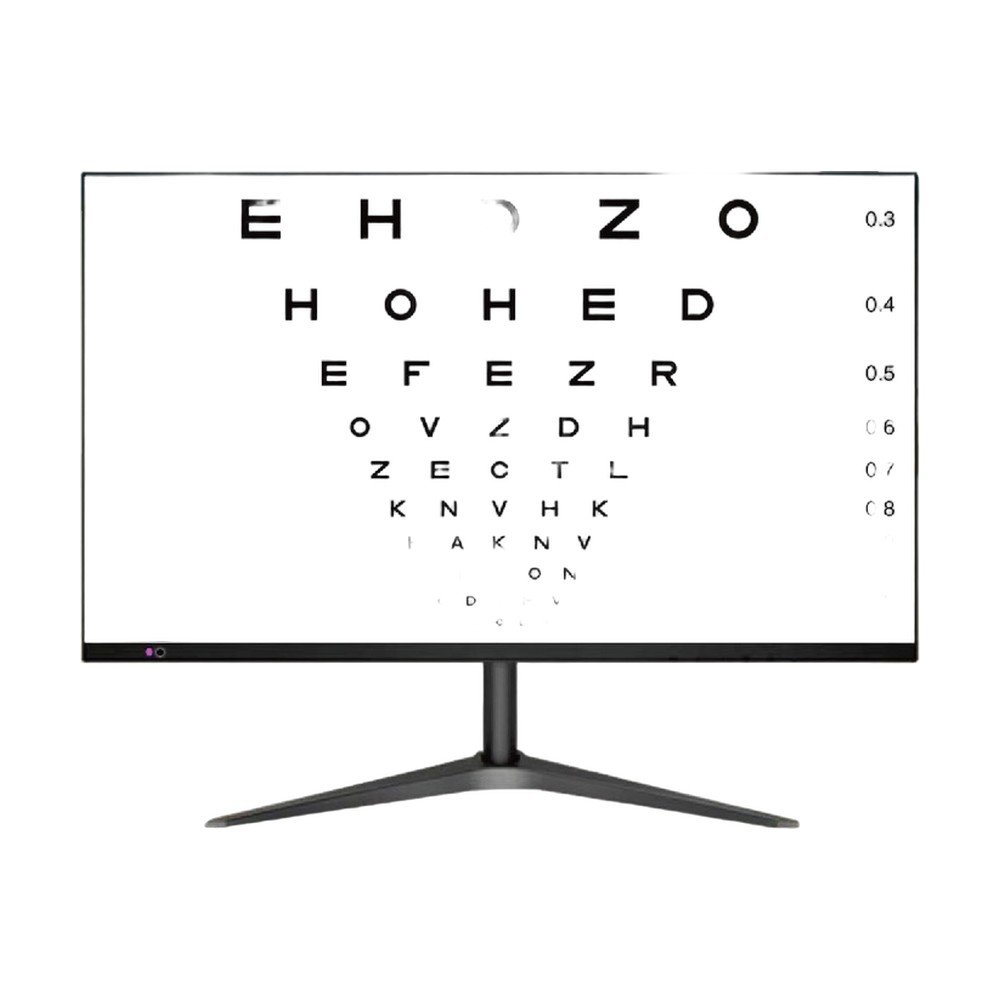
LCD Vision Chart 23.8 inch C9006: A visual acuity testing chart or chart projector for standard eye exam distance and near vision screening.
What a vision chart does in your practice
Visual acuity is measured at the start of every eye test, and the chart is what patients remember. Classic illuminated charts and LED or LCD chart projectors both show optotypes, while projectors and screens add tests for astigmatism, binocular vision and colour vision at the press of a button.
What to look for
- Testing distance: 5-6 m rooms suit wall charts; short rooms need a projector or a mirror setup
- Optotypes: Snellen letters, numbers, tumbling E, Landolt C and pictures for children
- Extra tests: red-green, cross cylinder, polarised and fixation disparity tests save time in refraction
- Remote control and wall or unit mounting
Ordering from Optinovate
- Supplied from the Netherlands to optical shops, optometry practices and clinics across Europe
- As the EU importer, we check the CE and MDR documents of each model before we deliver it
- A personal quote within 24 hours, with delivery time and VAT checked for your country (0% for EU businesses with a valid VAT number)
- Questions about set-up or daily use? Ask us on WhatsApp or by email
Frequently asked questions
Chart projector or LCD vision chart?
A classic projector is simple and robust. An LCD or LED chart gives sharper optotypes, more tests (astigmatism, binocular vision, colour vision) and easy switching with a remote control. In a short room, a mirror setup or a chart calibrated for short distances solves the testing distance.
Which optotypes do I need for children?
For young children use pictures, tumbling E or Landolt C instead of letters. Most modern chart projectors and screens include them, so one device serves adults and children.
See all vision charts or ask us which model fits your practice.